
OSHA's Federal Safety Rules for Roofers in Lake Ozark, MO
Homeowners around the Lake of the Ozarks know how fast a summer storm can strip shingles, crack a ridge vent, or send a tree limb through a roof deck. What many don't realize is that whoever gets called in to handle that storm damage works under a strict set of federal safety rules, not just company policy. At Select Exteriors & Roofing, those rules shape how we plan, staff, and execute every job. Understanding them helps you recognize the difference between a roofer built for the long haul and one cutting corners at height.
What "OSHA Subpart Q" Actually Means for Roofers
Property owners researching roofing safety online often come across the term "OSHA Subpart Q." In the federal regulations, Subpart Q of 29 CFR 1926 actually governs concrete and masonry construction, not roofing. The rules that specifically protect roofers fall under Subpart M, the fall protection standard that applies to nearly every construction trade working above ground level.
That distinction matters because it affects what to ask us, or any roofing contractor, before signing a contract. When we talk with a homeowner about fall protection systems, guardrails, and roof slope thresholds, we're speaking the trade's real regulatory language. A contractor who can't explain those basics is a warning sign, regardless of which subpart name shows up in a Google search.

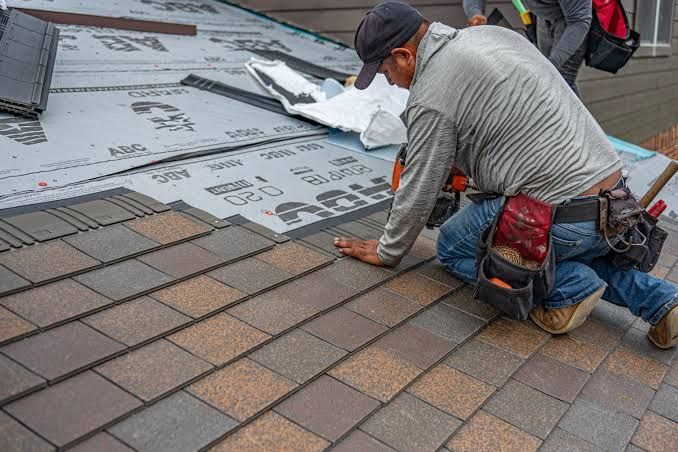
Image credit: Joel Gabriel from Pexels
The Fall Protection Rules We Follow on Every Roof
Fall protection is the collection of equipment and procedures, such as guardrails, safety nets, and harness systems, that keeps a worker from falling off an elevated surface or breaks the fall safely when one happens. Federal rules require it whenever we're six feet or more above a lower level, a threshold that covers the overwhelming majority of residential and commercial roofs, including the flat and low-slope roofs common on lake-area garages and outbuildings. Here's how the requirement breaks down by roof pitch:
- Low-slope roofs need guardrail systems, safety net systems, a personal fall arrest system (a harness and lanyard setup anchored to the structure), or a warning line system (a rope or wire marking a safe perimeter back from the roof edge) paired with one of those protections. On roofs 50 feet wide or narrower, a safety monitoring system, meaning a dedicated person watching for hazards, can substitute on its own.
- Steep roofs require guardrails fitted with toeboards (short barriers that stop tools and materials from sliding off the edge), safety net systems, or a personal fall arrest system.
If any of this vocabulary is new to you, our roofing terms glossary breaks down more of the language you'll hear during an inspection or repair. Skipping these steps isn't just breaking a rule. It's gambling with a fall from a height that, statistically, rarely ends well.
Why These Standards Carry Extra Weight at the Lake
Roofing work at the Lake of the Ozarks comes with its own physical demands. Long, humid Missouri summers put our crews under direct sun on dark shingle surfaces for hours at a stretch, and heat compounds every other hazard on a steep roof. The National Institute for Occupational Safety and Health identifies direct sun exposure and high heat and humidity as major contributors to occupational heat stress, a real risk on top of the fall hazards already built into the job.
The stakes behind these rules aren't abstract. Federal data from the Bureau of Labor Statistics recorded 370 fatal falls, slips, and trips among construction and extraction workers in 2024, out of roughly 1,032 total construction fatalities that year. Missouri isn't a state-plan state, so federal OSHA enforces these standards directly here rather than through a separate state agency. For a lake community full of steep roof pitches and seasonal rental turnover, that direct federal oversight is one of the only consistent safeguards for homeowners in Lake Ozark, Kaiser, and the Village of Four Seasons alike.
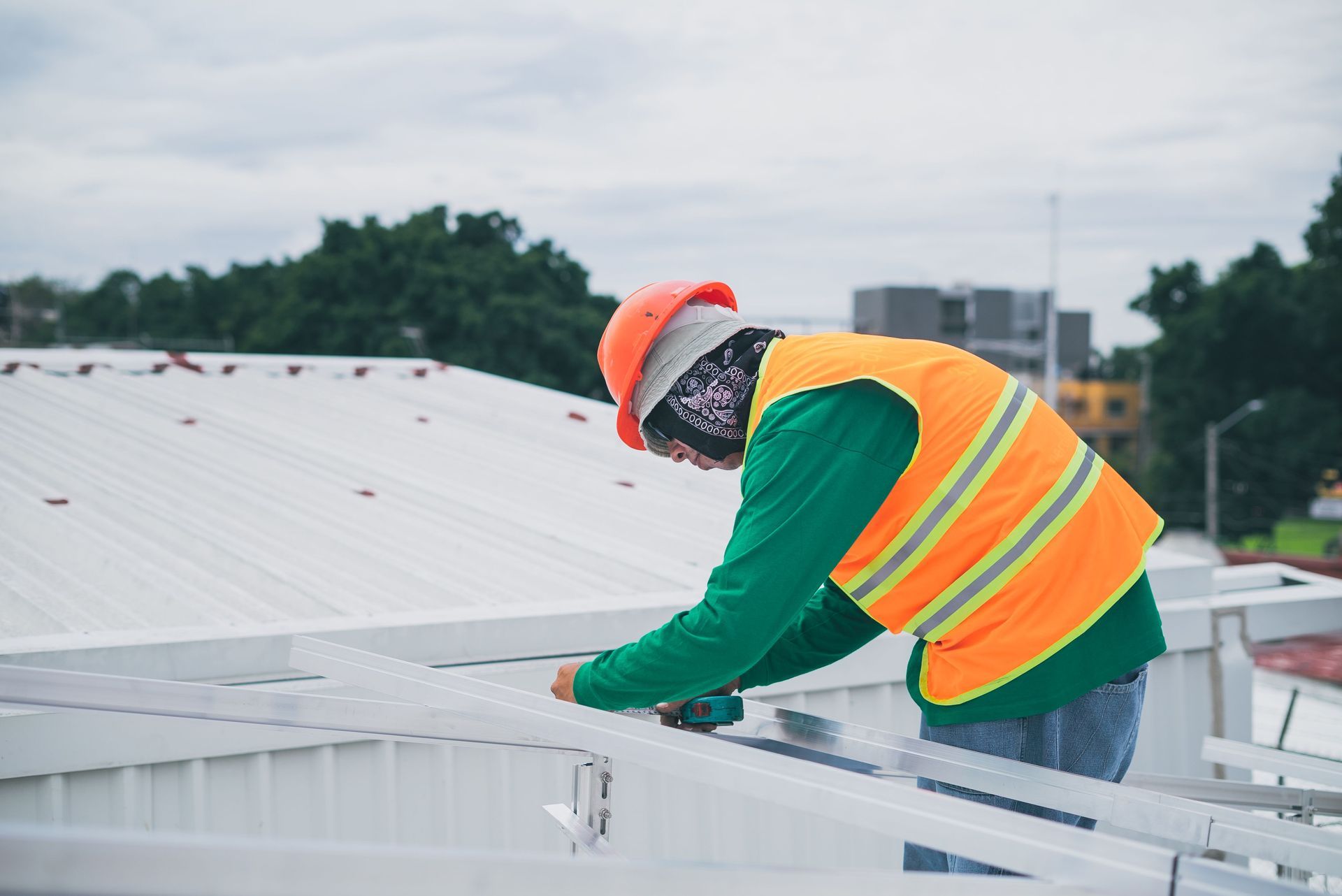
Image credit: Los Muertos Crew from Pexels
What to Ask Before Hiring a Roofer at the Lake
You don't need to memorize federal code to hire safely. A few pointed questions do the work:
- Does the crew use guardrails, safety nets, or personal fall arrest systems on every job, not just when a supervisor happens to be watching?
- Who on-site is responsible for fall protection compliance, and can that person explain it in plain terms?
- Does the company carry workers' compensation and liability coverage that reflects actual roofing risk?
- How does the crew handle heat and weather delays on multi-day lake-area projects?
We answer all four of these questions for every homeowner who calls us, and you can see how past clients felt about the results in our customer reviews.
Work With a Lake Ozark Roofing Team That Takes Safety Seriously
We've built Select Exteriors & Roofing around exactly this standard, backed by 25 years and more than 1,000 completed projects across mid-Missouri. Whether we're handling roof repair, a full roof replacement, or gutter work on a lakefront home or commercial building, our crews follow the same fall protection requirements on every job. That commitment protects our crews and the quality of the work we hand back to you.
If you're dealing with missing shingles, storm damage, or you simply want a professional inspection before the next big Ozarks storm rolls through, we're ready to help. Reach out to us to schedule a visit and get a clear, honest assessment of what your roof needs.
Related Posts